
The City of Sweet Home and the South Santiam Watershed Council continue to collaborate on the restoration of approximately three acres of floodplain and wet meadow habitat along the east side of Ames Creek in Sankey Park, behind the Sweet Home Senior Center. This area has been greatly impacted by invasive plant species, particularly Himalayan blackberry and reed canarygrass. The restoration project aims to reestablish native streamside vegetation, improve the habitat, and provide community members with opportunities to experience a healthy lowland riparian forest and floodplain. Work began in spring 2025 with mowing and herbicide treatment to address the blackberries and other vegetation. In the fall of 2025, large silage tarps were placed over about an acre of reed canary grass to prevent it from regrowing.
On October 15 and 16, the City and SSWC removed the tarps and seeded the area with a mix of native wetland prairie species. Additional bare-root native plants are scheduled for planting this
winter.
The project builds on over two decades of restoration work by the City and SSWC in Ames Creek and Sankey Park. In the mid-2000s, SSWC partnered with the City’s Parks and Recreation Department and the South Santiam Youth Watershed Council on a stream restoration project. More than 1,000 feet of channel was shaped into a complex, meandering course, with boulder weirs, log revetments, and cobble rock added to increase in-stream habitat diversity. More than 10,000 riparian and wetland plants were established along the channel to improve habitat and help stabilize stream banks.
Many of the natural features found along the Sankey Park section of Ames Creek reflect this long-term restoration effort. The current project continues the City and SSWC’s collaboration, with a focus on streamside vegetation and floodplain habitat in another part of the park.
Restoration Approach
- Invasive Plant Removal:
Himalayan blackberry is being treated with aquatic-safe herbicides and mowing. Reed canary grass is being controlled with silage tarps, an agricultural method that smothers vegetation and reduces herbicide use. - Native Planting:
Seasonally wet areas will be planted with native grasses, sedges, rushes, and wildflowers. Higher areas will be restored with riparian trees and shrubs, including alder, salmonberry, wild rose, and willow. - Wildlife Habitat:
The new vegetation will improve habitat for birds, pollinators, and other wildlife, while creating a healthier landscape for the community.
Project Timeline
Spring 2025
Removal of blackberry and other vegetation using mowers, chippers, and masticators.
Summer 2025
Initial herbicide treatments.
Fall 2025
Silage tarp installed over one acre of reed canary grass; follow-up herbicide treatment.
Late Winter 2026
Planting of native trees and shrubs in raised areas and around tarped zones.
Spring–Fall 2026
Three additional herbicide treatments.
-Fall 2026-
Removal of tarp and seeding of wet meadow mix.
Late Winter 2027
Additional native plantings.
Community Involvement
Members of the public are invited to participate in volunteer days!
Watch our website for upcoming events!

Recent News Posts
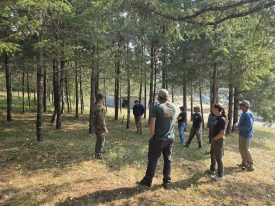
Defensible Space This month, the South Santiam Watershed Council and partners with Wildfire Ready Linn County visited a project site…

Wildfire Ready Linn County The South Santiam Watershed Council is proud to be a partner of Wildfire Ready Linn County,…