
I recently visited the Moose Creek and Soda Fork restoration projects, two large wood restoration projects aimed at enhancing fish habitats and supporting the broader ecosystem in the upper watershed. Joined by Lance Gatchell, a hydrologist with the USFS Sweet Home Ranger District and technical advisor for the watershed council, we observed changes and improvements to these installations. You can get more information and see images of the projects before the trees were placed in the streams here and here.
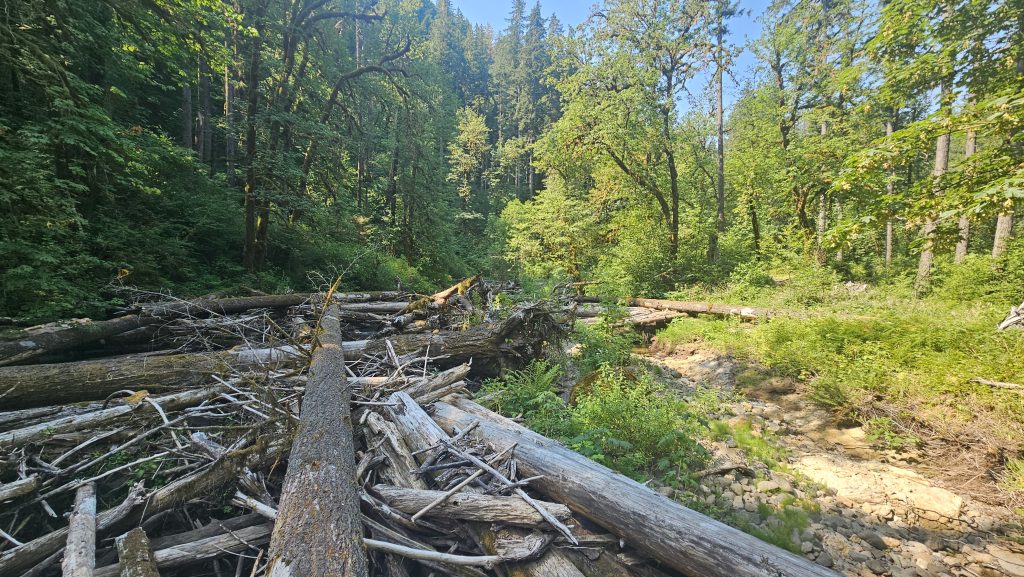
The large wood installations at Moose Creek, initiated in 2008 through a collaboration between the South Santiam Watershed Council and the USFS, are a prime example of effective habitat restoration. These installations, designed to simulate natural structures historically present in streams, provide essential benefits including structure, cover, and hydraulic complexity. The changes in the stream channel, including the creation of pools, riffles, and bars, provide improved fish habitat. Lance and I observed a significant amount of sediment deposited upstream of the structures, along with accumulations of medium and large wood that had been trapped while flowing downstream. We also found fresh beaver sign in a few locations along Moose Creek!
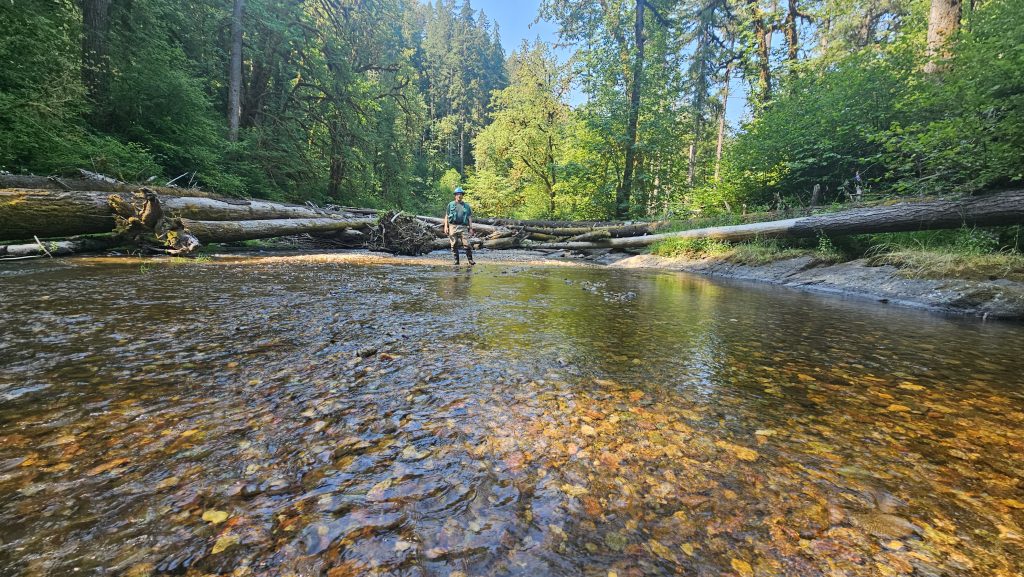
After we visited Moose Creek, we took a break for lunch by the mainstem of the South Santiam River. After lunch, we went upriver to look at potential areas for future restoration work.
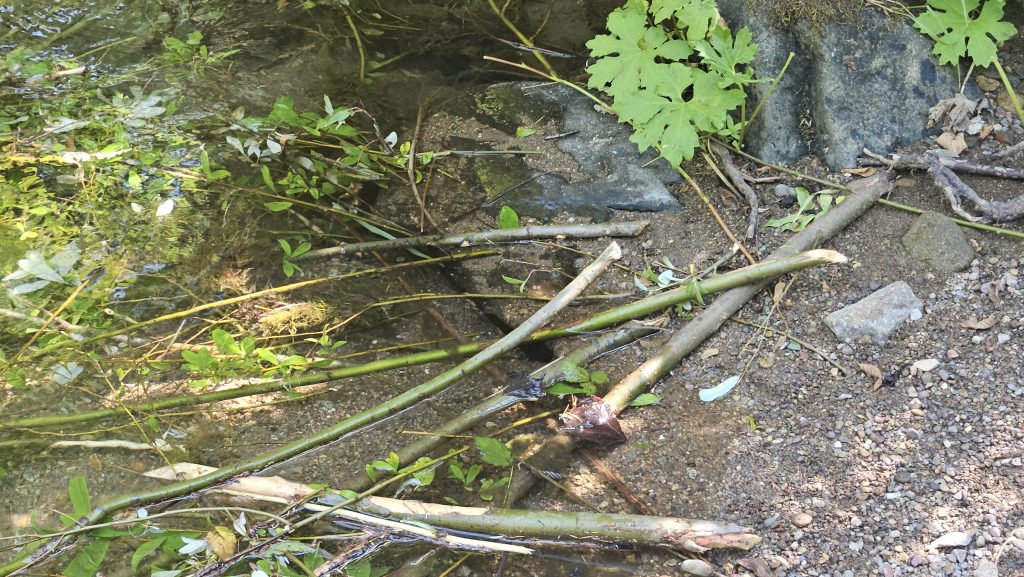
A few days later, Lance and I visited large wood installations in the Soda Fork of the South Santiam River. Since wood was installed in 2013, we have observed significant improvements in habitat quality and quantity. The large wood structures have contributed to greater stream complexity, and we observed areas where the structures altered the main channel of the stream. We found remnants of smaller wood installations from the early 1990s. These older structures, made of logs about 12 to 20 inches in diameter, had been cabled together and anchored into the bedrock and boulders. The smaller diameter logs could not withstand the force exerted by high flow events, leading to their eventual breakage and downstream migration; only remnants of the structures remain.
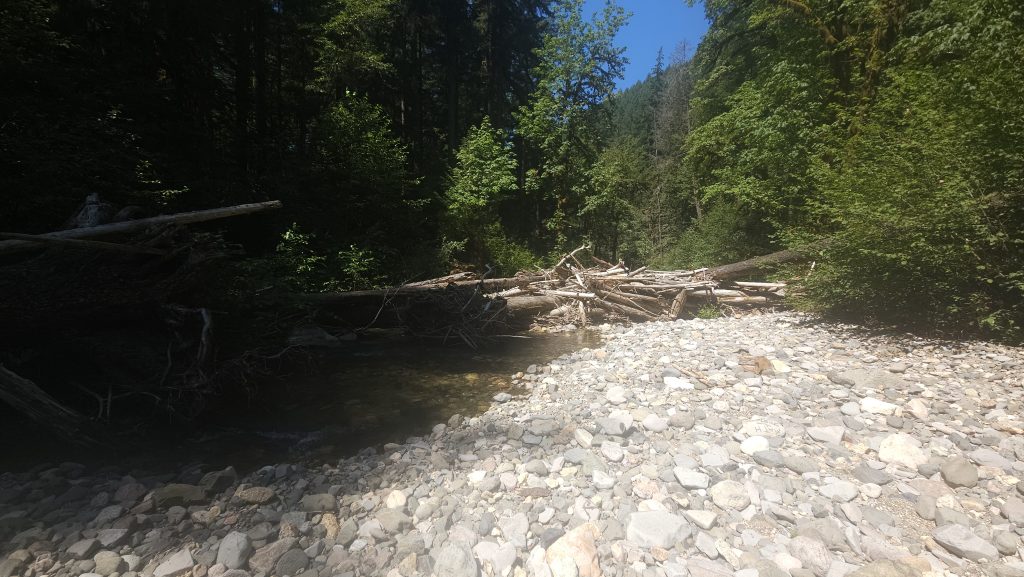
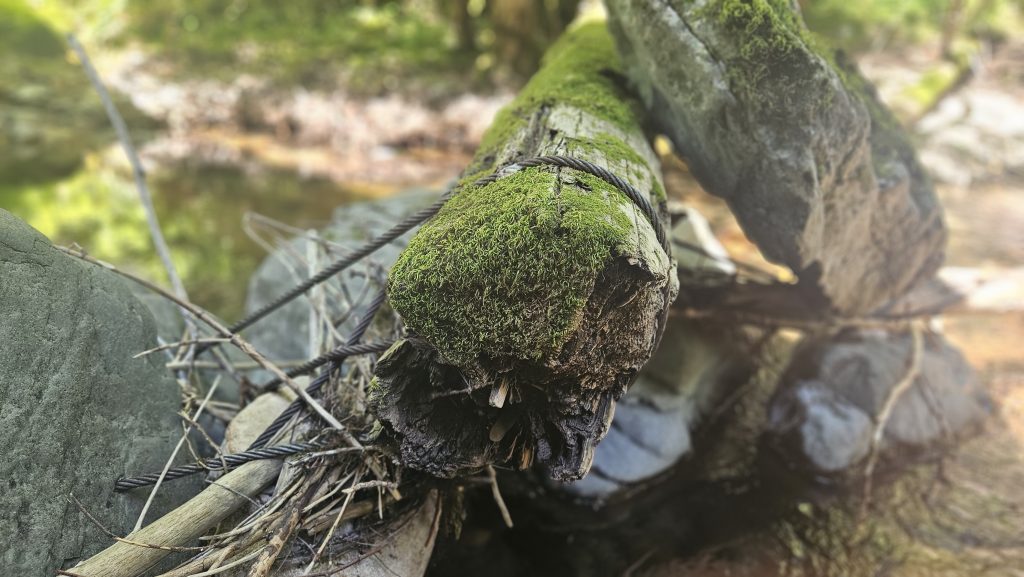
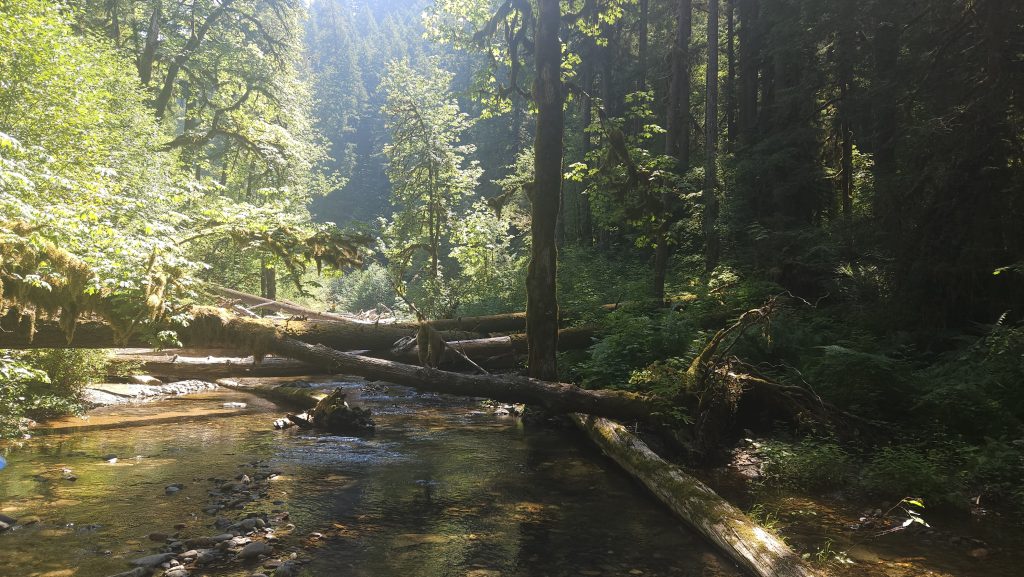
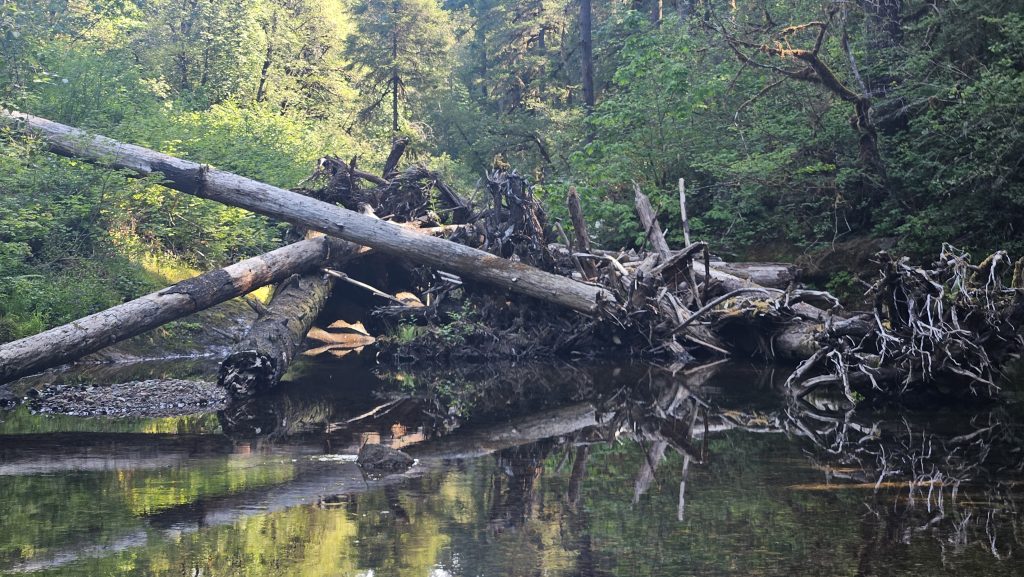
Using large trees with intact root-wads to help restore and support watershed processes has shown to be more effective than cabling smaller logs in place. Larger trees require significantly more water to begin floating and are capable of withstanding higher flow volumes without failing. Over time, these large logs trap and recruit additional wood of varying sizes, forming extensive logjams that not only slow and widen the creek but also reduce the shear force on the banks and bed of the stream. The natural process of logjam formation helps to create a more stable stream environment and promotes material deposition and sorting. These materials, including sand, gravel, cobble, and boulders, are crucial for the life cycles of many aquatic species, providing spawning substrate for fish like steelhead, lamprey, and Chinook salmon, as well as habitats for macroinvertebrates like crayfish, mussels, and stoneflies. The larger trees offer physical cover for fish, protecting them from predators, high flows, and harsh environmental conditions. Additionally, the root-wads of these trees create complex underwater habitats that support a diverse range of species.
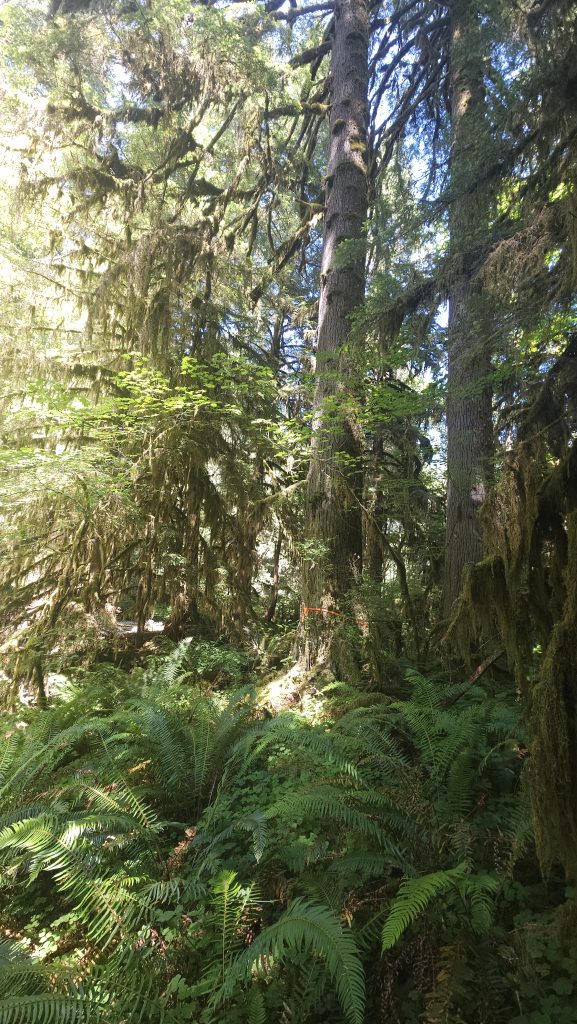
As we moved upstream from the old cabled wood placements, Lance and I identified areas that might be suitable for future restoration efforts We looked for areas in the stream that weren’t too steep and might provide the most ecological uplift and habitat benefit from future wood placements. That day, we flagged several potential sites for future surveys and inspections to gauge their suitability.
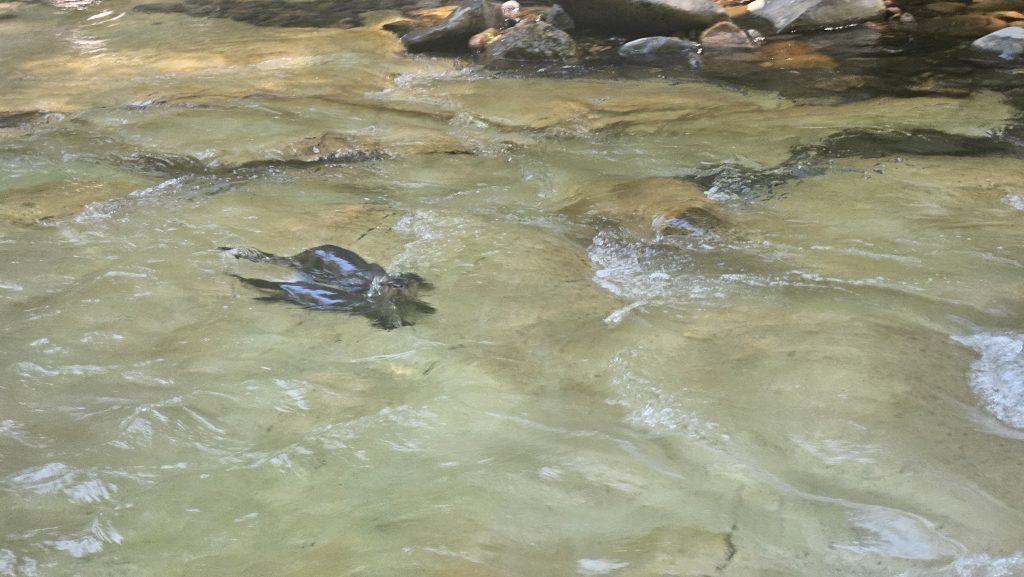
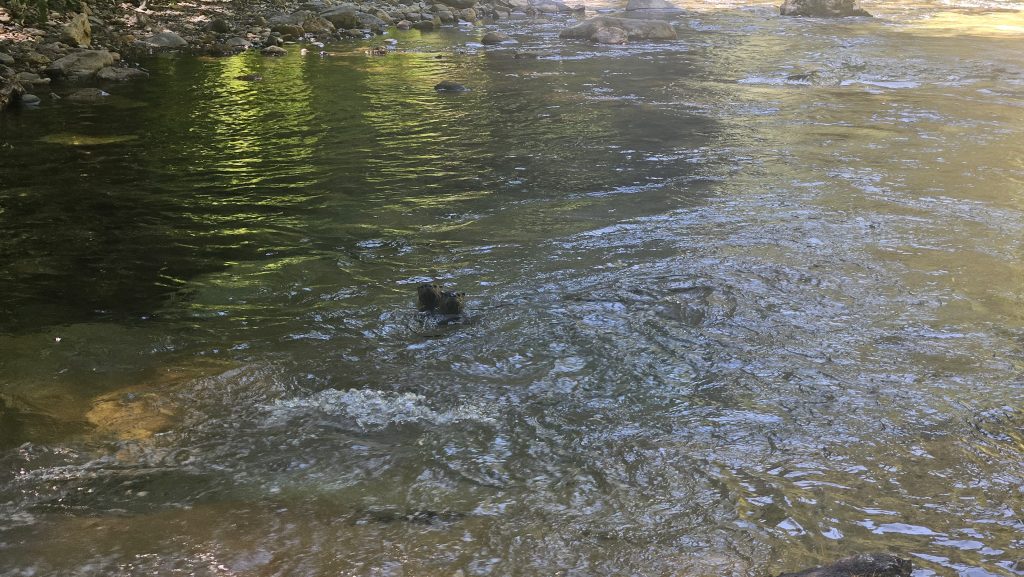
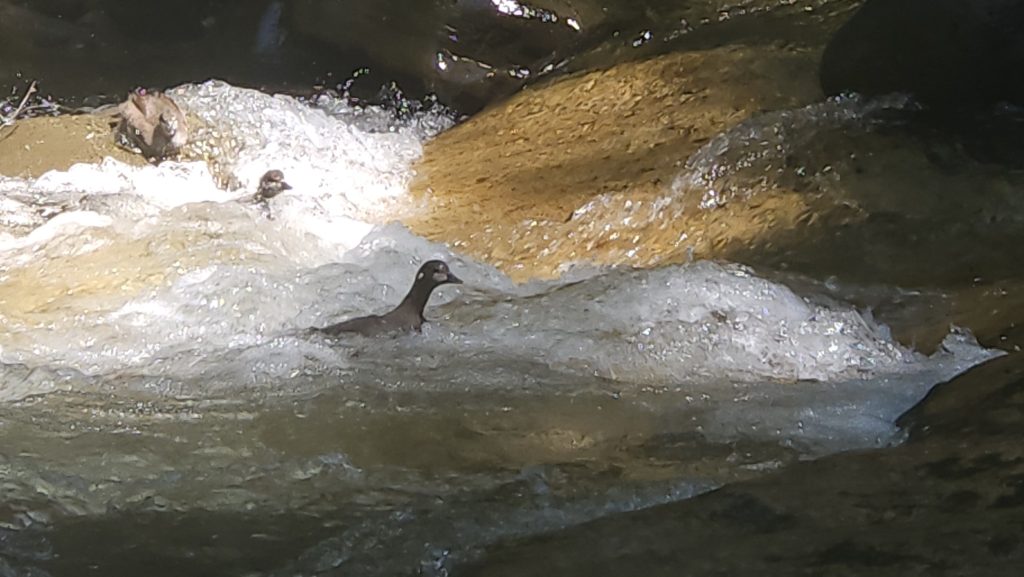
Our visit to Soda Fork was particularly memorable due to several wildlife encounters. We observed two river otters. Additionally, we spotted an adult Chinook salmon, an exciting observation as it was the first adult Chinook salmon reported in Soda Fork since the 2013 restoration efforts. Hopefully, we can soon report that Chinook are widespread throughout Soda Fork. Further along the creek, we saw a hen Harlequin duck with three ducklings. Although usually found on the coast, Harlequin ducks breed on the banks of fast-moving mountain streams. Watching these ducks navigate Soda Fork, along with the other wildlife sightings, was a testament to the overall success of these restoration efforts.
The watershed council and USFS are currently in the early stages of discussion and planning for future work, which includes inspections, surveys, permitting, and fundraising, for continued restoration efforts on the South Santiam and Soda Fork. This process will take approximately two years to complete, ensuring the projects are rooted in the best available science, fully funded, and sustainable in the long term, ultimately leading to more effective and lasting restoration outcomes.
Restoration on federal lands can provide critical spawning and rearing habitat for steelhead and salmon higher up in the watershed; Moose Creek and Soda Fork projects are a testament to these efforts. Restoration work lower in the watershed is equally important and helps to maintain cool stream temperatures, provide habitat for migrating fishes, and create wildlife corridors for terrestrial animals. The watershed council works from these headwater reaches of the South Santiam to the confluence of the North and South Santiam, from upland meadows to lower valley streamsides. If you have questions about restoration on private lands or are interested in discussing a restoration project on your land, please contact me t.styhl.sswc@gmail.com. Together, we can make significant strides in preserving and enhancing the natural beauty and ecological health of the South Santiam watershed, ensuring a healthy, productive, and thriving watershed for generations to come.
Recent News Posts
Defensible Space This month, the South Santiam Watershed Council and partners with Wildfire Ready Linn County visited a project site…

Wildfire Ready Linn County The South Santiam Watershed Council is proud to be a partner of Wildfire Ready Linn County,…